
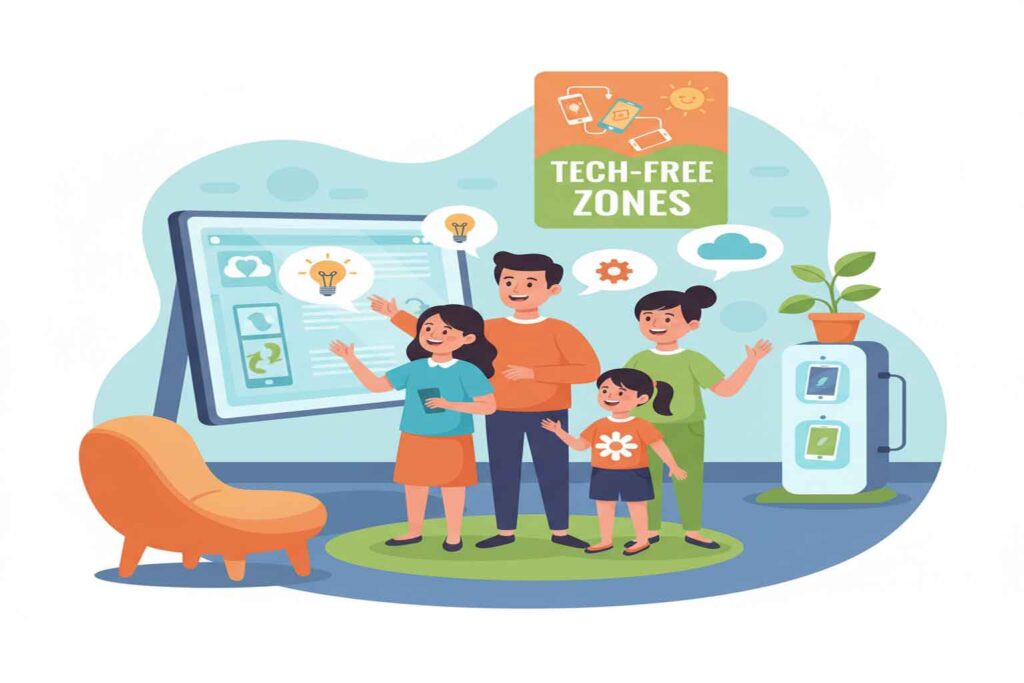
In 2025, a family media plan turns screens into tools for connection, learning, and calm—rather than sources of stress. This guide shows how to co‑create a simple, realistic plan with children from the start, so expectations feel fair, device boundaries are clear, and healthy digital habits actually last. By protecting tech‑free zones, agreeing on device curfews, and choosing high‑quality content together, families can enjoy the benefits of technology without sacrificing sleep, school, or time together.
Why co‑create the plan with kids
- Ownership and buy‑in: when children help shape the rules, they’re more likely to follow them and remind others.
- Skill building: co‑creation teaches negotiation, planning, empathy, and responsible digital citizenship.
- Fewer power struggles: shared decisions reduce the “because I said so” dynamic and make consequences clearer.
Set shared goals before setting rules
Agree on 3–4 priorities that matter most this season—sleep, homework, family meals, friendships, or mental wellbeing. Turn each priority into a short statement everyone can remember (for example: “Sleep before screens,” “Homework before gaming,” “Meals are for conversation”). These principles will guide every rule and make enforcement easier.
Tech‑free zones and times that stick
Bedrooms
No phones or tablets overnight; install a central charging station outside bedrooms.
Mealtimes
Devices away at breakfast and dinner to protect conversation and mindful eating.
Transitions
Keep screens off during the first 30 minutes after school and the hour before bedtime.
Family time
Declare one weekly outing or game night completely screen‑free.
Create age‑aware screen rhythms
Preschool and early primary
Short, high‑quality sessions co‑viewed with an adult; prioritize creative apps, reading, and movement breaks.
Upper primary
Homework first, then limited leisure time; encourage creative projects (digital coloring, music, coding) over endless scrolling.
Teens
Align limits with responsibilities (exams, sports); discuss social media expectations, night curfews, and privacy safety together.
Choose quality content on purpose
Not all screen time is equal. Favor creative and educational experiences—digital coloring books, pixel‑art puzzles, documentaries, language or music apps—over passive, endless feeds. When possible, co‑view or co‑play. Ask after each session: “What did we learn? How did it feel? Would we do it again?”
Use tools, not just willpower
- Enable downtime and app limits on devices.
- Turn off autoplay and notifications for focus.
- Require approval for new apps or games.
- Keep a shared calendar that marks homework blocks, device curfews, and planned family time.
Write the plan in plain language
Put the plan where everyone sees it (fridge, hallway, family chat). Keep it short, positive, and specific. Replace “No phones all evening” with “Downtime from 8:30 pm to 7:00 am; all devices charge in the kitchen.” Add both privileges (extra creative time on weekends) and clear consequences (temporary app removal) that match the behavior.
Sample family media plan (copy and adapt)
- Our purpose: “We use technology to learn, create, and connect—without replacing sleep, school, meals, movement, or time together.”
- Tech‑free zones: bedrooms, dining table, and one weekly family activity.
- Daily rhythm: no phones before school; homework first; device downtime 8:30 pm–7:00 am on school nights; weekend schedule agreed every Friday.
- Content: educational and age‑appropriate only; adults preview new shows/games; no downloads without permission.
- Privacy & safety: never share full name, school, address, location; ask before posting photos of others; report uncomfortable content immediately.
- Responsibility: devices are a privilege; broken rules lead to temporary removal or tighter limits; repaired trust brings privileges back.
- Review: 10‑minute family check‑in on the first Sunday of each month to adjust rules and celebrate wins.
Make monthly check‑ins a habit
Habits stick when they’re reviewed. Schedule a short meeting to ask what’s working, what isn’t, and what needs to change for the next month (exams, travel, new hobbies). Rotate a “tech captain” role—each week a different person leads the family in charging devices, starting downtime, and choosing the weekend’s screen‑free activity.
Handle pushback with empathy
- Name the feeling: “It’s frustrating to pause a game.”
- Reconnect the rule to the goal: “Sleep before screens helps you feel better tomorrow.”
- Offer a choice inside the limit: “Downtime starts at 8:30. Prefer reading, drawing, or prepping tomorrow’s bag?”
- Follow through consistently and repair quickly after mistakes.
Red flags that call for tighter boundaries
Daily conflicts around devices, late‑night use, grades dropping, social withdrawal, or secrecy around apps may signal that the plan needs immediate revision. Tighten limits, increase co‑viewing, and maintain warm, open conversations. Seek professional guidance if anxiety, sleep issues, or cyberbullying persist.
Frequently asked questions
- What if schedules are chaotic? Protect just two anchors: device‑free dinners and overnight charging outside bedrooms. Build from there.
- What about special occasions? Agree on exceptions in advance (movie nights, travel) and return to the plan the following day.
- Do adults follow the plan? Yes—modeling matters. Adults also charge devices outside bedrooms and keep mealtimes screen‑free.
Conclusion and next step
When families co‑create a family media plan and protect tech‑free zones, screens support what matters most—sleep, school, health, and connection. Start small: write three house rules, set one nightly curfew, and post the plan where everyone can see it. Review it next month, celebrate progress, and fine‑tune together. With steady follow‑through, 2025 can be the year your home models healthy, joyful, and sustainable digital life for everyone.
Excellent site you have here.. It’s hard to find high quality writing like yours these
days. I really appreciate individuals like you! Take
care!!