
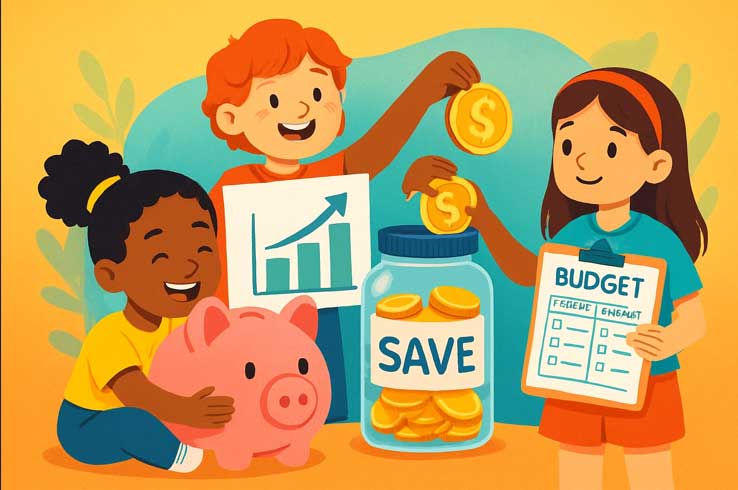
Financial literacy is one of the most critical life skills children need for future success, yet in many countries it is still not systematically taught in schools. A healthy money mindset—the attitudes, beliefs, and behaviors around earning, saving, spending, and investing—shapes how children will navigate economic challenges throughout their lives. Teaching financial literacy early builds confidence, responsibility, and the practical skills needed for economic independence and long-term wealth building.
The Foundation: Money Mindset and Financial Psychology
A money mindset includes the beliefs and emotions a person associates with money, such as whether money feels scarce, stressful, empowering, or neutral. These beliefs, often formed in childhood, drive financial behaviors throughout life, influencing decisions about saving, spending, taking on debt, and planning for the future. Behavioral economics shows that mindset can affect financial outcomes as strongly as income level or formal education
The brain’s reward system responds to money and rewards in similar ways, so children quickly form emotional links between money and pleasure, fear, or security. As the prefrontal cortex develops—responsible for planning and impulse control—kids can learn skills like delaying gratification, comparing options, and thinking about long-term consequences. Childhood and adolescence are therefore powerful windows to build healthy financial habits instead of reactive, emotion-driven choices.
Scarcity thinking focuses on “there is never enough,” while abundance thinking focuses on “resources and opportunities can be created over time”. Children who only hear “we can’t afford that” may absorb fear and limitation, while those who hear “that’s not a priority right now, here is what we are choosing instead” learn intentional decision-making. Adults can gently shift language and behavior to model calm, thoughtful, values-based money decisions instead of panic or secrecy.
Why Financial Literacy Matters Today
Young people who receive financial education are more likely to save regularly, budget their money, and avoid high-interest debt later in life. They also tend to feel more in control of their choices, which reduces stress and supports better mental health. Over time, even small differences in saving, investing, and avoiding unnecessary fees or debt can compound into large differences in wealth and security.
A lack of financial knowledge, on the other hand, can lead to costly mistakes like carrying high-interest credit card debt, falling for predatory loans, or failing to plan for emergencies. These patterns often repeat across generations when money is a taboo subject in families. Teaching kids to understand basic concepts like interest, budgeting, and risk helps break this cycle and supports long-term stability.
In a digital economy, children also face new financial realities: online shopping, in-app purchases, subscriptions, digital wallets, and investing apps. They need skills to recognize marketing tactics, manage online spending, protect their information, and think critically before clicking “buy”. Financial literacy is no longer optional; it is part of being a responsible digital citizen.
Building a Healthy Money Mindset in Children
One key step is to notice and challenge limiting beliefs such as “I am bad with money” or “we will never have enough”. Adults can replace these messages with growth-focused ideas like “money is a skill you can learn” or “we are learning to manage our resources better every year”. Regular, calm conversations about money help children see it as a tool, not a source of shame or magic.
Children watch what adults do more than they listen to advice. When parents compare prices, plan purchases, save for goals, and talk about trade-offs, kids absorb powerful lessons about how to handle money thoughtfully. On the other hand, hiding all financial stress or constantly arguing about money can send the message that money is dangerous, confusing, or out of control. Transparent, age-appropriate sharing builds trust and teaches that challenges can be faced with a plan.
Hands-on experience is essential. Giving children real responsibility over small amounts of money allows them to make choices, see consequences, and adjust. When a child spends all of their money on something that breaks quickly, that experience often teaches more than any lecture about “wasting money”. Adults can guide reflection by asking what they learned and how they might decide differently next time.
Early Childhood (Ages 5-7): Simple Foundations
At this age, kids can begin to understand that people work to earn money and that money is exchanged for goods and services. Simple activities—like sorting and counting coins, playing store, or using clear jars labeled “save,” “spend,” and “share”—make these ideas concrete and visual. Short, simple stories and picture books about money also help connect emotions and values to financial choices.
Parents can introduce the idea of “wants” versus “needs” using real-life examples such as groceries versus toys. When shopping, asking questions like “Is this a want or a need?” and “What are we choosing not to buy when we choose this?” helps children understand trade-offs. Small, regular earnings for age-appropriate tasks (not every chore) reinforce the link between effort, time, and income.
Middle Childhood (Ages 8-12): Practical Money Skills
During this stage, children can grasp more detailed concepts like budgeting, saving for medium-term goals, and comparing prices. A simple allowance system, combined with expectations for certain responsibilities, gives them practice in planning and prioritizing. Many families use a three-part system where kids divide money between saving, spending, and giving to charity or causes they care about.
This is also a good time to open a basic savings account and show how balances grow over time. Children can help plan and budget for events like birthdays, outings, or back-to-school shopping, which strengthens math skills and decision-making. Conversations about advertising, influencer marketing, and “limited-time offers” help them recognize pressure tactics and think before they buy.
Adolescence (Ages 13-18): Advanced Financial Literacy
Teenagers are ready for deeper concepts such as income streams, taxes, credit, debt, investing, and long-term planning. They can learn basic budgeting frameworks, like dividing income into needs, wants, and savings, and track their money using apps or spreadsheets. Part-time work, internships, or small businesses (like tutoring, digital products, or services) offer real-world experience with earning and managing income.
This is also the time to explain how credit cards, loans, and interest rates really work, including both the benefits and the risks. Teens should understand what a credit score is, how late payments can affect it, and why high-interest debt is so costly over time. Introducing simple investing concepts—such as compound growth, diversification, and long-term index funds—prepares them to make more informed choices once they are adults.
Core Financial Skills Every Child Should Learn
Key lifelong skills include earning money, saving for goals, budgeting, making thoughtful spending decisions, giving, understanding basic investing, and being cautious with debt. Each of these skills can be taught gradually with age-appropriate tasks, reflection, and increasing independence. Repeating the cycle of plan–act–review helps kids see money as something they can manage, not something that just “happens” to them.
Teaching children to save regularly, even very small amounts, builds the habit of paying themselves first. Budgeting trains them to think about priorities and limits instead of spending automatically. Learning to evaluate purchases by quality, usefulness, and long-term satisfaction helps them resist impulsive buying and social pressure.
Giving is also a powerful part of the money mindset. When children allocate a portion of their money to help others, support community projects, or contribute to causes they care about, they experience money as a tool for impact—not just personal consumption. This supports gratitude, empathy, and a sense of abundance instead of constant comparison.
Tools, Games, and Real-Life Practice
Families and educators can use a mix of analog tools (jars, envelopes, notebooks) and digital tools (kids’ banking apps, simple budgeting apps, or gamified financial literacy apps) to keep learning engaging. Board games that involve earning, trading, and managing resources help children practice strategy and risk assessment in a low-stakes environment. Classroom “economy” systems, where students earn tokens for responsibilities and manage a simple budget, can also be very effective.
Real-life situations are the best teachers. Let children plan a portion of a family event budget, manage their own back-to-school spending within a set limit, or run a small project like selling crafts or digital creations. After each experience, take time to discuss what went well, what was challenging, and what they would change next time.
Teaching Resilience and Handling Money Stress
No family’s financial life is perfect, and children will inevitably see or feel some level of money stress. These moments can either create fear or build resilience, depending on how adults respond. Explaining that challenges are temporary, showing how you adjust the budget, and emphasizing problem-solving over blame helps kids feel secure even in uncertainty.
When children make financial mistakes, treating them as learning opportunities rather than reasons for shame is crucial. Ask reflective questions such as “How did that choice work out?” and “What could you do differently next time to get closer to your goal?”. This builds a growth mindset around money and encourages responsibility without fear.
Simple Roadmap for Parents and Educators
Start by becoming more aware of your own money messages and modeling calmer, more intentional behavior. Then, introduce age-appropriate routines: jars and simple choices for young children; basic budgets, goals, and price comparisons for older kids; and income, credit, and investing topics for teens. Layer in games, stories, real-life tasks, and regular check-ins to keep financial literacy an ongoing, normal part of life rather than a one-time lesson.
Educators can integrate money topics into math (percentages, interest, budgeting), social studies (economic systems, labor, inequality), and project-based learning (classroom businesses or simulations). Partnering with families and local professionals—such as bankers or entrepreneurs—adds real-world perspective and makes financial literacy more concrete and inspiring.
Conclusion
Teaching financial literacy and a strong money mindset is a powerful way to give children more choices, stability, and confidence in their futures. With consistent guidance, real-world practice, and open conversations, kids can learn to manage money wisely, avoid common traps, and use financial skills to support their dreams and values. Making money education a natural part of family life and school helps create a generation that is better prepared for both the challenges and opportunities of the modern economy.