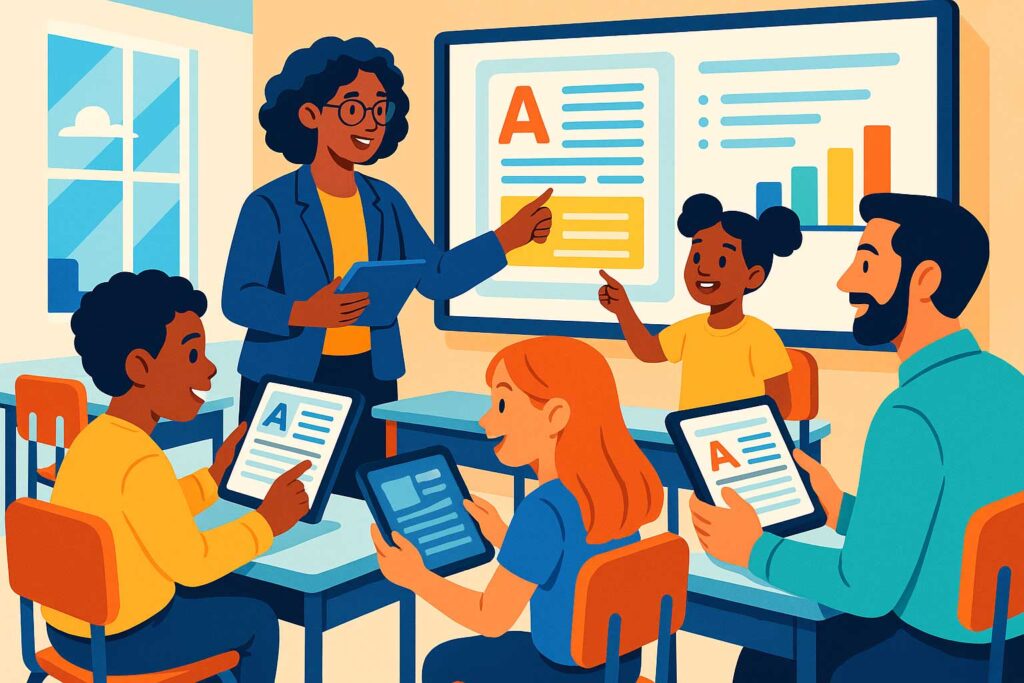
In an era of rapid educational change, having access to high-quality educational resources is no longer a nice-to-have—it’s essential. Whether you are a teacher, student, parent, or instructional designer, understanding how to select, use, and get the most out of educational resources makes a significant difference in learning outcomes. In 2025, with digital tools, artificial intelligence (AI), and open access materials expanding, the game has changed.
In this article, we’ll explore what educational resources are trending, how to evaluate them, and how to implement them smartly in today’s classroom or learning environment. By the end, you’ll have actionable ideas you can apply immediately.
What We Mean by “Educational Resources”
Before we dive into trends and tips, let’s clarify the term.
Educational resources refer to teaching and learning materials—digital or physical—that support instruction and learning. They include:
- Open Educational Resources (OER) such as freely licensed textbooks, videos, and modules.
- Digital learning platforms and tools (apps, interactive software, LMS modules).
- Supplementary materials like worksheets, simulations, virtual experiments, and gamified activities.
- Teacher-designed resources (lesson plans, handouts, formative assessments).
- Adaptive and personalized learning resources driven by data and AI.
Increasingly, the best educational resources combine content, interactivity, analytics, and accessibility.
Why Educational Resources Matter More Than Ever
Several forces are driving the importance of educational resources today:
- Personalized and adaptive learning – Learners demand materials that adapt to their pace, style, and needs. According to a recent review, personalized learning supported by adaptive resources is a major e-learning trend in 2025. Articulate+2Exploding Topics+2
- Digital and hybrid learning environments – The shift to online, blended or hybrid models means that digital educational resources are no longer optional—schools, universities and training providers need robust digital content. Research.com+1
- Skill-based and lifelong learning – With rapidly changing job markets and technological disruption, resources that help learners build practical skills (not just theoretical knowledge) are essential. edX+1
- Access and equity – Open educational resources (OER) help reduce barriers to quality materials, making learning more inclusive. Wikipédia+1
Thus, selecting the right educational resources is as important as the teaching and learning itself.
Top Trends in Educational Resources for 2025
Here are the key trends you need to know about if you’re looking to stay ahead.
1. AI-Powered and Adaptive Resources
Artificial intelligence is increasingly embedded in educational resources—adaptive quizzes, virtual tutors, and feedback systems that tailor content to the learner. The e-learning trend list cites AI-generated content and personalization as first-order changes. Articulate+1
Implication: When evaluating resources, look for adaptive pathways, learner analytics, and tools that adjust to performance, not just static content.
2. Microlearning & Modular Resources
Short, focused modules—“micro-learning”—are gaining traction because they fit busy schedules and allow flexible uptake. Articulate+1
Implication: Use resources that can be consumed in bite-sized chunks (10-15 minutes) and still deliver meaningful learning.
3. Immersive & Interactive Experiences
Resources using gamification, virtual reality (VR), augmented reality (AR), or simulations are transforming student engagement. Articulate+1
Implication: Look for materials that go beyond text or video. Interactive labs, simulations, and collaborative platforms enhance engagement.
4. Mobile-First and Anytime Learning
Learners expect to access resources on smartphones, tablets and any device. With increased mobile usage, a resource’s mobile usability is critical. Articulate
Implication: Prioritize resources that are device-agnostic, responsive, and accessible offline if possible.
5. Real-World Skills & Competency-Based Resources
Resources built around skills, not just knowledge, are rising. Educational providers are shifting focus to “can-do” outcomes rather than purely content delivery. edX+1
Implication: Use resources that clearly map to skills or competencies (e.g., “able to design a micro-learning module”, “able to analyse data with Excel”).
How to Choose High-Quality Educational Resources
Given the abundance of options, here is a checklist you can use to evaluate resources:
- Alignment: Does the resource align with your learning goals, curriculum, or standards?
- Accessibility: Is it accessible on multiple devices? Is it multilingual or culturally inclusive?
- Adaptivity: Does it offer adaptive feedback, differentiated paths, or analytics?
- Engagement: Does it include interactivity, gamification, simulations or hands-on tasks?
- Evidence-based: Is it supported by research or best practices?
- Open licensing (if relevant): Can you reuse or adapt the material (i.e., it is OER)?
- Scalability & cost-effectiveness: Can it be scaled (for classes, schools, or online learners) and does it fit budget?
- Practicality: Does it help learners build actual skills (not just theory)?
- Support & training: Are teachers/trainer guidance, professional development or help available?
Practical Steps to Implement Educational Resources in Your Setting
To translate the above into actionable steps:
- Audit current resources – List what you already use and identify gaps: Are they digital? Adaptive? Mobile-friendly?
- Define desired learning outcomes and competencies – What should learners be able to do after using the resource?
- Pilot new resources – Choose a small subset (class, course, group) and try a new resource, gather feedback and metrics.
- Embed analytics and feedback loops – Use the resource’s data (time spent, mastery, progress) to refine your approach.
- Train educators or facilitators – Good resources are only as good as their use; ensure teachers/trainer competence with the tools.
- Ensure equity of access – Provide alternatives for learners without consistent internet or devices; use offline or blended versions.
- Iterate and scale – Based on pilot results, adopt the best resources across your context; track impact over time (engagement, achievement, retention).
Common Pitfalls and How to Avoid Them
- One-size-fits-all solutions: Avoid using the exact same resource for every learner. Adaptivity is key.
- Passive content overload: Too many long videos or slides equal lower engagement. Choose interactive, learner-centred resources.
- Tool gap without integration: Having great resources but no strategy or educator buy-in leads to underuse.
- Ignoring mobile/offline users: If learners cannot reliably access materials, the resource fails.
- Focusing only on content, not skills: In 2025, learners expect actionable, skill-oriented outcomes.
- Neglecting data and feedback: Without tracking usage and outcomes, you won’t know if a resource works.
Final Thoughts: The Future of Educational Resources
The future of educational resources lies at the intersection of accessibility, personalization, skill-focus, and technology integration. As reported by the Organisation for Economic Co‑operation and Development (OECD) in its “Trends Shaping Education 2025” report, education systems must anticipate disruptions and proactively adopt resilient strategies—including leveraging robust resources. OECD
For institutions and learners who adapt to this new paradigm—choosing and implementing high-quality educational resources—the benefits can include improved engagement, stronger learning outcomes, and greater equity.
If you are looking to update your resource library, integrate new digital tools, or support teachers in adopting modern learning materials—now is the time to act.